“Steve Jobs”: One of the best films of the year

The just-opened Steve Jobs film, written by the incomparable Aaron Sorkin (The West Wing, The Social Network) and directed by Danny Boyle of Slumdog Millionaire fame is clearly one of the best, written, directed and acted films this year.

The film stars Michael Fassbender, who, it’s true, does not superficially resemble Steve Jobs, per se.

However, over the course of the film, Fassbender embodies the essence of the Apple co-founder: His visionary brilliance, his creative, strategic and tactical genius, and his obsessive/compulsive laser-like focus.

But he also portrays Jobs’ near pathological indifference and cold-hearted insensitivity to his friends, his colleagues and most dramatically, his own family, including the mother of his daughter Lisa, who is Jobs’ “Rosebud” in this gripping Citizen Kane-like story.

Fassbender as Jobs is ably supported by his smart, long-suffering marketing executive, closest colleague, “work wife” and conscience, Joanna Hoffman, played marvelously by Kate Winslet, who is totally unrecognizable in the role.

Other excellent supporting actors are Seth Rogan as Steve Wozniak, Jobs’ Apple co-founder; the technical brains behind Apple, “Woz” is clearly too sweetly loyal and good-natured for the “kill or be killed” tech environment. Jeff Daniels plays John Sculley, who initially played father figure to Jobs in Apple — then fired Jobs from his own company and was vilified the rest of his life for that decision.

But the film really belongs to Fassbender and the brilliant writer Aaron Sorkin.

This is not your normal linear, chronological biopic.

Instead, it is a brilliantly filmed play in three acts. The dialogue snaps, crackles and pops. The pace is fast and loose and frenetic. Think of Sorkin’s The West Wing, but faster and more dramatic, with greater and emotional mood swings.

This film focuses on three “launch” events: the iconic debut of the original Macintosh computer; Jobs’ unveiling of Black Cube at his post-Apple company; and Jobs’ triumphant return to Apple with the invention of the iMac.

Before each launch, Jobs — always accompanied by his loyal marketing exec, Hoffman — is visited by the same four characters: the mother of his child, pleading for money and recognition of their child; Woz, whose star has been clearly eclipsed by Jobs in the public eye; and Sculley, both commanding and classy, but ultimately a pathetic tragic figure.

For me, the core of the film is Jobs’ interaction with his daughter, Lisa, whom, in the first act, he cruelly rejects as his daughter, even scoffing at the notion that the early Apple “Lisa” computer was named after her.

However, Jobs gradually comes to see his better self in his daughter. She embodies his brilliance, but also his goodness, which has been buried beneath a lot of bad emotional baggage and a history of neglect and abandonment.

As the proud father of a daughter, the heart-wrenching scenes between Jobs and Lisa left me teary-eyed.

Jobs’ treatment of his chief engineer Hertzfeld and of Woz verges on the pathologically cruel. But in Sorkin’s expert hands, we at least understand what drives Jobs to be the person he is. We may not like him, but we understand him and still revere his incredible marketing acumen and his world-shaking technological achievements — he was “ the brilliant conductor who leads the orchestra.”

Sorkin has done it again. I urge you to see this film at least once. And perhaps twice or three times, in order to catch and appreciate the brilliance of the dialogue and understand what demons drove Jobs to the incredible achievements that impacted us all.

For we rebels, we conservatives, it was a great ride while it lasted

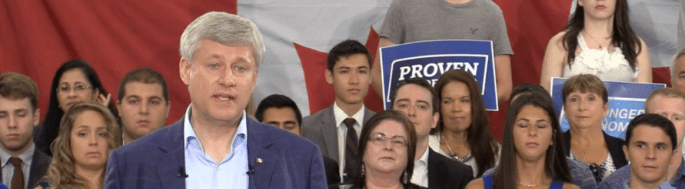
I want to personally thank Prime Minister Stephen Harper — he will always be “Prime Minister Harper” — one of the most successful, transformational prime ministers in Canadian history, ranking up there with Sir John A, Laurier and Mackenzie King.

Once a populist, always a populist, Harper truly got his political mojo working in the wild west of Alberta. And through his pure force of will, determination and brilliant political instincts, he helped create the Reform Party and transformed a ragtag bag of right wingers, oil and gas wildcatters, hard-driving entrepreneurs, gun enthusiasts, socially conservative yahoos, free traders, free market libertarians, small “c” conservatives, anti-Eastern urban elitists,  hard-working, self-reliant, suburban new immigrants, and Eastern populists (like me) into a fighting and disciplined political force that won three hard-fought federal elections.

Even in 2015, despite almost 10 years in power, despite the collapse of the NDP, Harper led a party to nearly 32% of the vote and 99 solid seats in the new Parliament.

And clearly going against the national red tide, Harper and the Conservatives increased its Quebec representation. Max Bernier, you rock, mon ami!

As leader (contrary to Liberal and CBC propaganda), Harper did not have a hidden agenda. He stood by his political promises and never reopened the socially divisive issues of abortion and a woman’s freedom of choice. He strongly supported same sex marriage and sexual equality. And the Conservative Party and the country were better for Harper standing up for these principles and values.

Ironically, in this last campaign, it was Harper, not any of the other leaders, who stood up loudly and courageously for our etched-in-stone Canadian values of the equality of men and women, when he publicly proclaimed that a foreign culture (whose values require women to veil themselves so that men will not be motivated to rape them, or whose values are anti-gay) are values that have no place in Canada and should never be encouraged or permitted.

Harper also kept Canada on a firm fiscal path. When the international recession hit in 2009, contrary to orthodox right wing thinking, Harper did the right thing and tacked to the centre and left, stimulating the economy by running several years of consecutive deficits.

Then, when the economy turned around, Harper and his then Finance Minister Flaherty, did the heavy and unpopular lifting of reducing government programs and brought the country back into fiscal balance, while keeping personal and corporate taxes at historic lows.

The easy and politically popular thing to do would have been to borrow billions of dollars, increase debt and deficits and kick the problem down the field for another leader and another generation, like Pierre Trudeau did in the 70s — and David Peterson and Bob Rae did in Ontario in the 90s.

Instead, Harper chose the much more difficult approach of saying no to many free-loading special interest groups, who wanted to line their pockets.

He also said “no” to many provincial premiers and many Canadians, who preferred getting federal government handouts to doing the hard and necessary work of building up their own provincial businesses and revenues and reining in their own programs and reducing their deficits.

Yes, that took discipline, toughness and determination and cold-heartedness. But those were the right things to do.

But in politics, as in life, “no good deed goes unpunished.”

So the Canadian people punished Harper for being a tough, firm, son of bitch, who did not kowtow to biased liberal elites in downtown Toronto or Montreal or their biased elitist media interests.

Some of the Canadian people also punished Harper for not kowtowing to the many anti-Semitic, anti-Israel member countries which form the United Nations.

Some of the Canadian people also punished Harper for not kowtowing to the job-destroying/cap and trade/carbon tax/green environment international movement.

But like Harper, I am a true blue populist. And the people are always right.

Apparently, some of the same people who stuck by and voted for Rob and Doug Ford, this time some of these people also voted for Justin Trudeau.

I stand whole-heartedly by the people’s choice.

I am a populist, unrepentant contrarian, a rebel-rousing, anti-elitist — and as such a very proud Canadian.

Thank you, Prime Minister Harper, for your incredible service to this great land of ours.

We true blue Canadian Conservatives shall never forget you.

Poll: Harper leads, within sight of majority (plus or minus 2.5 martinis)

In a recent poll by Wolfe Analytics (a local polling company created, commissioned and retained exclusively for me personally), the Conservatives are at 38%, the Liberals 33%, the NDP 24%, and the remaining left wing nuts and nation-destroying separatists are split between the Green Party and the Bloc Quebecois.

When these numbers are extrapolated over all the seats at play in this election, the Tories should win a decisive majority, the Liberals will form the official opposition, and “Angry and Stoppin Tom” Mulcair will soon be dropped like a hot poutine and hereafter known as “Tom Who?”

This new polling group, Wolfe Analytics, eschewed the more commonplace modern polling methods, i.e.,those annoying interactive robo calls.

Instead, we assembled a highly inebriated polling sample, up close and personal, in two upscale Toronto bars and one downscale pub.

Since intensive and comprehensive one-on-one interviews were de rigueur, the polling sample was admittedly a little thin, but still very representative of the greater Canadian electorate from Victoria to Peggy’s Cove.

Here are some representative results of the polling sample:

One of the first persons interviewed was Andie, a blonde 30-something inner suburban housewife in North Toronto, who will be voting for Harper because of his tough fiscal policies.

Next came a 30-something Asian woman, also married with child, living in downtown Toronto. Surprisingly, she was also voting for Harper because of his strong fiscal policies, thinks Trudeau is an intellectual lightweight, and identified herself as a proud member of “Ford Nation.”

I next interviewed a Latin American-born 50-something mother and her 30-something daughter. Both will be voting for Harper and ignoring the featherweight pugilist Justin.

I then spent a good deal of time at another restaurant/bar, Kasa Moto, where I interviewed a whole range of men and women. Among this group, Harper won the approval of the majority of the men voting, while Trudeau and Mulcair split the “hot chick” vote fairly evenly.

At the Four Seasons d/bar, I interviewed a group of 20-something hip downtown urban dudes and cool young women. Shockingly, the vote split among this group: Harper 2, Trudeau 2 and Mulcair 1.

Clearly, Harper and the Conservatives are resonating mostly with men, both urban, suburban and rural in Ontario, along with those in have-not Atlantic Eastern provinces. He is also popular with men and women alike in Quebec, the prairie provinces and BC.

Trudeau’s numbers reflect a strong urban base, with pockets of strong Liberal support in downtown Toronto, Montreal,  in the Atlantic provinces and in urban BC.

This unscientific and subjective poll may not be bang on mathematically accurate, but it does provide an interesting snapshot of a downtown Toronto urban/suburban group, who, surprisingly, are strongly in the Harper camp.

Mulcair “forgot the first rule of Quebec politics”

At the start of his election, Thomas Mulcair thought he had his Quebec base all sewed up. Buttoned down. Solid.

So what happened to the seemingly indestructible NDP “Orange Crush” in Quebec?

Well, Mulcair, his brain trust and most political pundits took their eyes off the always bouncing Quebec political ball.

In the 2011 election, NDP leader Jack Layton and his Quebec lieutenant Thomas Mulcair supported the controversial policy of Quebeckers being able to separate from Canada as long as a referendum on the issue received 50% + one vote.

This policy, taken from the separatist BQ playbook, catapulted the NDP in Quebec to an extraordinary 59 seats, and about 43% of the popular vote.

So at the outset of the 2015 election, Mulcair assumed that a similar position; his very family friendly federal childcare proposal (based in large part on the Quebec model); his progressive vow to raise the taxes on big corporations; and his pro environment and anti-oil and gas policies, would all further solidify NDP support in Quebec.

But Mulcair forgot the golden rule of Quebec politics.

Quebecers don’t vote with their pocketbook, like those in the rest of Canada. They vote with the heart. And outside of Montreal, Quebec’s Francophones, Anglophones and Allophones alike — all of them oblivious to the downtown NDP intellectual elites — were questioning once again:

Who is a true Quebecker? What are Quebec’s true values?

After decades of turmoil, the consensus among those three above-named groups was that Quebec was first and foremost a French-speaking province.

If any Quebecker wanted to work in or receive public services, that person must deal in French. It is not a matter of personal choice.

That’s a fact, Jacques!

Secondly, after centuries, Quebec, finally liberated itself from the shackles of Catholicism in the 1960s and emerged as a secular state. The Catholic Church — or any church, temple or mosque — was no longer welcome in the legislature, the boardrooms, the factories or the bedrooms of the province.

Thirdly, the provincial Liberal government, headed by Premier Couillard, introduced a bill this summer that stipulated that public employees must “exercise their function with their face uncovered,” and persons receiving those services must do likewise.

This bill has the overwhelmingly support of all the major parties and the electorate.

The niqab and the burqa were effectively banned. Because another value essential to the Quebec identity was the equality of men and women.

Most Quebeckers believe these Muslim garments are not a religious expression or a personal choice, but that they reflect the values of a foreign culture that is contrary to essential Quebec values and to Quebec’s identity.

And in Quebec, it is always about Quebec’s identity.

Ironically, Prime Minister Harper, an Anglophone born in Ontario and educated in Alberta, instinctively understood what the niqab and burqa represent to the Quebec people.

Mulcair and his lefty downtown Montreal elites, however, thought what was good enough for them was good enough for the rest of Quebec.

So when Harper seized the moment, and proposed to enact federal legislation banning the niqab for those working in the federal public service and for those dealing with the public service in person, a surge ofConservative support destroyed vulnerable NDP strongholds in its wake.  

I predict the haughty and arrogant Mulcair and his minions will go down to horrible defeat in Quebec onOctober 19.

Because paradoxically, the Bible said it best in the Book of Proverbs: “Pride goeth before destruction, and an haughty spirit before a fall.”

(Not bad for a third generation Anglophone Quebec Jew, eh?)

End times? Toronto Star’s Michael Geist questions CBC’s “relevance”

Is the end of the world nigh? Are pigs circling the CBC “white elephant” on Front Street?

I only ask this because one my favorite columnists at the Toronto “Tsar,” Professor Michael Geist, has come down heavy on CBC.

Sounding almost like our own Brian Lilley, Geist writes:

While disagreement over CBC funding is as old as the broadcaster itself, the more uncomfortable discussion for the CBC is its coverage of the current election campaign — particularly its approach to national debates and political party advertising — which raises troubling questions about its relevance in the current media environment.

The most puzzling decision has been its refusal to broadcast debates hosted by other organizations. The CBC may be disappointed with the debate approach adopted by the political parties in this campaign, but that does not change the sense that if the national public broadcaster does not air programs in the national public interest, it calls into question the very need for a public broadcaster.

Those of us on the right have been ranting and raving about this for years: Why are hard-working Canadian taxpayers stuck paying $1 billion of our hard-earned taxpayer money every year to prop up a heavily biased, incompetent organization — CBC English TV — which has been losing thousands of viewers every year, right across the board, in all categories:

* Its entertainment division. Consider the viewing options: This Hour Has Twenty-Two Viewers; The “Should Have Been Cancelled Years Ago” Rick Mercer Report; The Horribly Unfunny Mr. D, to name but three.

* Its sports division. Losing Hockey Night in Canada and replacing it with Canadian award shows (in which heavily-subsidized artists award each other awards for unread books, unheard music and unwatchable TV shows and films) wasn’t a programming change bound to attract regular hard-working Canadian viewers. (That is, the people who are paying the bills.)

* Its news and documentary division. Petey Mansbridge’s The Notional has been irrelevant for years, except to the dwindling elitist mob south of Bloor, who believe Naomi Klein and her sock puppet husband Avi should speak for all of Canada. And ironically, if CBC’s Marketplace was forced to compete in the free marketplace of ideas, it would go the way of home mail delivery.

Which brings us all back to the election debate issue.

CBC did not just shoot itself in the foot, as Geist claimed. It shot itself in both feet. Then it shot itself in the face. Then it committed harakiri on the steps of Front Street. For many Canadians, left and right, CBC’s refusal to air federal election debates has pushed them into the “defunding” camp.

The Canadian people are doing just fine without the CBC. There are still hundreds of solid print and online newspapers. Hundreds of TV networks. Hundreds of online TV networks, podcasts and blogs.

We Canadians have access to tons of news and information from sources more reliable than the highly biased CBC, which has geared all its anti-Harper reporting to side with any party that might throw it a financial lifeline.

I hereby predict the biggest loser of this federal election:

The CBC, by a landslide.

“Toronah”: A funny indie film about Toronto – with a cameo by Rob Ford

Post-TIFF, the major movie buzz in TO is about Toronah, a improvisational comedy set in Toronto.

A rough cut has been circulating in the downtown film world. It’s appeared out of nowhere.

Not just the cast, but the director and producer are all unknowns.

I have been told by inside sources that, from pre production to post-, Toronah was made in a mere three months. That’s unheard of in the Canadian or American film industry.

Rumours abound about its origins.

One source told me the film is the brainchild of three recent film school grads nicknamed “The Three Amigos.”

In the guerrilla filmmaking tradition, they shoot film first and ask for permission later.

Toronah is about funny, tragi-comic losers.

There is Mickey, a middle-aged dude from Chicago, financially down on his luck, in constant fights with his angry and disappointed wife. Basically, he’s a pathetic schmuck, an everyman.

Also, Mickey may or may not be in very deep doo doo with the mob, over some unpaid debts.

(Rumour has it that Toronah features cameos by real Toronto “wise guys”, playing themselves.)

Mickey is forced to come to Toronto to get some much needed cash from his wealthier cousin, Ricky.

There is Johnny K, a portly Asian fellow who’s awkward and a little clueless – who suddenly comes into possession of a black bag containing $100,000.

And the keys to a cool Yorkville condo. And one sweet set of wheels.

Toronah plays homage to Shakespeare’s Comedy of Errors, with Johnny K mistaken for the much wealthier Ricky, who is flying to Chicago to save Mickey — just as Mickey is flying to Toronto.

Johnny K, in a hilariously deadpan manner, has a series of sexual flings with drop dead gorgeous women/escorts/sidewalk hostesses/wannabe actresses, who all absurdly mistake him for Mickey.

There are other crazy characters who all cracked me up:

Boss Hogg — a profanity-spewing mountain of a man, all dressed in white — stole every scene.

Then there’s Billy: Respectable leasing agent by day, bisexual male whore by night.

Plus there’s a whole slew of salacious, man-eating women who may or may not be the long lost daughters of Mickey’s many previous liaisons.

But the straightest, most conservative, most compelling, most natural and clearly the most sober character in this whole film is the former Mayor Rob Ford, who appears briefly in the opening scene. This guy has natural stage presence. The camera loves Rob. And he nails his lines.

This film is crude, rude, lewd and many female characters are nude.

But what a fun-filled ride in a souped up Trans-Am it is!

Toronah: It’s my kind of film! (Bro.)

My dinner with Rob Ford

Last night, at the last minute, I showed up at a Toronto restaurant, and guess who was in attendance? Our former mayor, the incomparable Rob Ford.

He was having a bite to eat with a friend of mine.

I approached Rob’s table and my friend motioned for me to sit down.

Under the circumstances, Rob looked great. He was smiling. He was funny. He was mellow.

He had lost some weight and you could just tell he was getting back into fighting political trim.

Rob recalled that for a certain period during his mayoralty, I had written a series of articles in the Huffington Post explaining the political phenomenon that was, and still is, “Ford Nation.”

I’d explained why Rob Ford was that rare politician and public figure, one who inspired devotion and loyalty from a truly diverse multicultural population.

Ford Nation consists of men and women from their teens to their 90s. Cutting across all races, religions and ethnicities and socio-economic groups. Predominantly, working class and middle income South Asians, Asians, blacks, Filipinos, Persians, Russians, Vietnamese, Italians, Greeks, Muslims and of course, Jewish folks.

(And, yeah, a smattering of angry old white men and women.)

Mostly, from the GTA heartland: Etobicoke, North York, Scarborough, York and East York, but not exclusively so.

I reminded Rob that then and now, he still had the best political instincts in Toronto, if not in all of Canada.

Rob Ford would have stopped that stupid Olympics gravy train in its tracks. And not dithered back and forth, hemming and hawing, like the current mayor John Tory.

Remember Ford’s familiar rallying cries?

“Subways, subway, subways”

“The war on the car”

“Stop the gravy train”

“Respect the taxpayer”

These are not empty political slogans, but reflect a philosophy that still resonates with a large number of  GTA residents, both in the suburbs and in downtown Toronto.

And still drives the agenda in Toronto City Hall.

Rob Ford and John Tory both campaigned on saving millions of dollars of taxpayer money by privatizing garbage services east of Yonge Street.

By now, Rob Ford, if he was mayor, would have honored that campaign promise to the Toronto people. To date, Mayor Tory, as I predicted, has caved to the self-entitled unions and the highly conflicted Toronto downtown elitist leftist councilors.

Tory has failed to make the tough fiscal choices that Mayor Ford made during the very successful early years of his mayoralty.

Every day, Ford is getting stronger and stronger.

Last night, Rob Ford showed signs that he still has that fire in his belly.

In two more years, the complacent Tory and his downtown elitist supporters, better watch their back.

Because I think Tory is going to have quite a fight on his hands.

FORD MORE YEARS!

#TIFF and the #Tommunist Manifesto: Canadian actors shouldn’t be seen or heard off screen

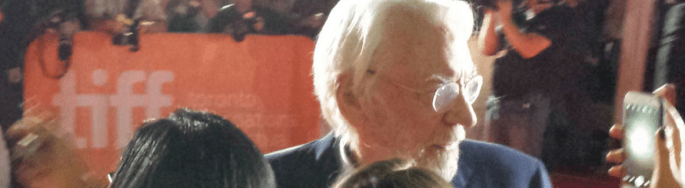
Canadian celebrities at the 2015 Toronto International Film Festival (TIFF) 2015 — notably actors Rachel McAdams, Ellen Page and the curmudgeonly, decrepit Donald Sutherland — bombed badly this week.

Not onscreen, but off, by supporting the appallingly stupid, Naomi Klein-penned Leap Manifesto.

(Nicknamed the “TommunistManifesto” by conservative wags in “honour” of supposedly centrist NDP leader Thomas Mulcair.)

The reputations of McAdams, Page and Sutherland weren’t the only ones hurt by association with this manifestly moronic manifesto.

Add to the list such notables (or forgettables) as Pam Anderson (whose best screen work was CPRing Tommie Lee’s manhood); multi-millionaire wheezebag and gas-guzzling hypocrite extraordinaire Neil Young; and the usual looney left suspects:  Stephen Lewis, David Suzuki, Maude Barlow and Sid Ryan, to name a representative few.

I am a big Rachel McAdams (True Detective) and Ellen Page (Juno) fan.

Donald Sutherland, on the other hand, was great in the 1970s (in M*A*S*H, Klute and Don’t Look Now) but since then his ongoing scene-chewing evil role in The Hunger Games, is, to use a highly technical cinematic term, pure crap.

We admire McAdams and Page for their acting talent and their ability to touch us and move us emotionally. But let’s face it: When they do so, they are reading other people’s lines and ideas.

Their fame and high profile are based upon their cinematic success and Hollywood promotion.

Where these actors fall miserably on their TIFF-ready faces is in their arrogant belief that their artificially-created Hollywood fame confers upon them influence and wisdom, so that we, their audience, will actually care and believe what they have to say in real life.

So let me put this in terms these clueless, ignorant,  self-satisfied, self-entitled, jet-setting, island hopping Canadian stars and celebrities understand.

Your public support of the Leap Manifesto? Two thumbs down.

You and the Manifesto were a bomb of Heaven’s Gate proportions.

Simply, this ridiculous and irrational manifesto proposes to fix problems that don’t actually exist in Canada: widespread extreme poverty, unsustainable inequality, the genocide of our native people.

And to top it all off, they think Canada’s climate change policy is a crime against humanity.

The Manifesto’s solution is revolution. To blow up Canada’s economy – specifically, its oil and gas sector.

And essentially, go back to a pre-industrial Walden-like existence, where all 35 million Canadians will tend to our garden and our cattle on our little cute farms.

All this would be sustained by clean, renewable  energy, pursuant to strict NIMBYism principles; In their own words – they call it a “new iron law” — “If you wouldn’t want it in your backyard, then it doesn’t belong in anyone’s backyard.”

Which, taken to its logical conclusion, means no renewal energy of any sort — wind farm or solar — you Hollywood nimrods! (Or, come to think of it, any more iron, either…)

Even the left of center Globe and Mail agrees:

The manifesto calls for immediate social revolution in response to the threat of climate change. Its “demands” include “innovative ownership structures” as an alternative to “the profit-gouging of private companies,” and a “new iron law of energy development” that, if taken seriously, would pretty much put an end to every project ever – pipelines, windmills and solar-panel farms included. This iron law states, “If you wouldn’t want it in your backyard, then it doesn’t belong in anyone’s backyard.

If these Canadian celebrities expected their natural audience — leftist NDP members and supporters — would be jazzed by these suggestions, they were misled. Or they have been powering their noses with “questionable” products.

Because the Leap Manifesto sank faster than Adam Sandler’s once buoyant career.

The response so far from Mulcair and his party? Zip, nada, zero. Crickets.

And for good reason, as the Globe’s editorial concludes:

We don’t think Mr. Mulcair endorses the manifesto’s madness. He is far more moderate than that. He is also a politician, and he wants to govern a country that is by its nature suspicious of radical social upheaval, especially when promulgated by rock stars.

Saddling him now, barely a month before the election, with the task of answering questions about a revolutionary utopian manifesto seems like an obvious case of failing to look before you… Well, you know the rest.

I love you, Rachel McAdams. Because of your film work, you are the archetypal sweet Canadian “girl next door”.
But by signing your name to this crazy manifesto, while probably being chauffeured around in a very large gas-guzzling limo, from movie premiere to movie premiere, and from private VIP party to private VIP party, you have transformed yourself into the ditsy, brain-dead lefty goof next door.

Not a pretty picture, Rachel, my dear.

Mistress America: How a film about a ditzy New Yorker will make you appreciate Stephen Harper more

Noah Baumbach and Greta Gerwig have co-written a brilliantly funny, enjoyable and very smart  New York-based film with Mistress America. Gerwig as Brooke is a thirtysomething, wacky, barely in control, self-described social media maven, self-taught interior style designer, pre-SAT tutor and sometime fitness instructor.

The famous female screwball comediennes of the thirties – Carole Lombard in My Man Godfrey and Katharine Hepburn of Bringing Up Baby – spring to mind. We revel in Brooke’s quirkiness, ditziness and jerkiness, knowing that she is doing a high wire act with her life without a visible net.

Though Brooke is brimming with enormous energy and self-confidence, she has significant flaws, which to the audience make her a very compelling character. And to me, a very appealing character.

With brings to mind our fearless leader, Stephen Harper.

But more about the Harper connection, later in this piece.

In New York, Brooke is thrown together with Tracy, a lonely Barnard College freshman, as their respective parents, Brooke’s dad and Tracy’s mom, are engaged to be married.

Brooke volunteers to be Tracy’s mentor and introduce Tracy to her very exciting New York life.

There are some terrific set pieces which demonstrate Gerwig’s amazing comedic talents: fearlessly running on and dancing onstage with a band at a oh so hip nightclub; climbing up her fire escape to her lofty loft and seducing investors to invest in her flighty family-style restaurant; tripping with her new “sister” Tracy in a car driven by Tracy’s nerdy Jewish ex-boyfriend and his hysterically funny and paranoid girlfriend.

This film is also Baumbach’s funniest, warmest and most open film and his directorial style is bang on brilliant.

Deep down we know that Brooke is all style and sizzle, with little of substance to show for all her crazy/funny schemes. She is terrific company. We would all love to spend a week-end hanging out with her in Times Square and doing Tequila shots with her in some Tribeca dive bar.

But I would not invest my hard-earned money with this very entertaining ditzy blonde, or even entrust her with managing anything of substance or worth. Her restaurant is doomed to ignominious failure and loss as well as all the other investors’ money.

Now do you see where I am going with this?

The ditzy brunette with the great hair, Trudeau, may seem appealing at first. Who wouldn’t want to party with this dude? But entrust him with our hard-earned tax dollars?

A guy who flippantly believes “the deficit will take care of itself” and his plan is to grow the economy “from the heart outward?

Is Trudeau getting financial advice from Celine “My Heart Will Go On” Dion?

Is this the guy you want to entrust your job, your mortgage, your house and the future financial well-being of your children with?

The same questions can equally apply to the scary and duplicitous Tom Mulcair.

Hundreds of thousands of jobs, both directly and indirectly in Alberta and Ontario rely upon our oil and gas industry.

Clearly, Mulcair and his star Toronto candidate Linda McQuaig want to keep our valuable oil in the ground in favor of a disastrous Green Energy alternative.

What is wrong with these crazy ideologically-driven lunatics? How come they have not learned from Ontario Premier Wynne’s disastrous foray into heavily-subsidized and non-economic wind farms and solar energy?

For these myopic Dippers, the private sector and profits are still as dirty as our so-called “dirty oil.”

Who in their right financial minds would entrust their jobs, their incomes and their futures with these crazy people?

In comparison, there is Prime Minister Harper.

Okay, he has some personality flaws.

He is apparently cold, calculating and manipulative. Probably no one’s first choice to hang with while chowing down a bucket of wings and quaffing a pitcher of beer at St. Louis’ Ribs.

He has been vilified for being controlling and running a highly-disciplined and tightly-controlled administration and government.

But with the worldwide drop in oil, the decline in the Canadian dollar and the stock market, these are very serious times in Canada.

I would rather our country be led by a tough no nonsense, coldly logical and brutally pragmatic leader than Captain Kumbaya or Stompin’ Tom Mulcair who deep down, believes the solution is to tax, tax, tax. Borrow, borrow, borrow. And according to Mulcair’s other star – Olivia Chow – throw billions and billions of taxpayer money at every Canadian Native, child, senior and tree-hugging urban cyclist – Greek style. Opa!!!

By comparison, Harper – flaws and all – looks very appealing.

Married to power: Hillary and Olivia and the double standard of wives in politics

Recently I attended a very entertaining Shakespeare play, The Comedy of Errors, performed in Toronto’s High Park. I had not read the play since “Hum 7” (Humanities 7,) a general survey theatre course, in my university days BI (before internet.)

When I reread the play prior to the performance, I was not that interested in the two major characters – two sets of identical brothers, both sets separated at a very early age from each other and from their parents.

What was more interesting to me was the Bard’s complex and modern view of women, marriage and a woman’s place in society – especially as embodied by the fascinating Adriana, the wife of Antipholus from Ephesus (as opposed to Antipholus from Syracuse.)

Adriana is married to a military hero, a successful and apparently wealthy businessman, prominent in Ephesian society, who also has the support of the Solinus, the Duke of Ephesus, the most powerful man in the country of Ephesus.

Accordingly, Adriana lives in a very large house with several male and female servants to attend to her every whim, a sort of Downton Abbey, 16th-century style.

But all is not hunky dory in the House of Antipholus. In this case, money, political power and social prominence do not buy marital bliss or even happiness.

Adriana’s husband also seems to be a philanderer – a rake who enjoys the company of a courtesan who owns the local tavern. Shades of Bill and Hillary Clinton or, closer to home, a former federal NDP leader.

This state of affairs (literally) makes Adriana positively ballistic – and rightfully so.

Adriana is depicted as a very strong, independent, intelligent, passionate and proud woman. Think  Elizabeth Bennet of Pride and Prejudice or Lady Mary of Downton Abbey. And the above-noted Hillary. And come to think of it, our very own Olivia Chow.

In speaking to her more compliant, unwed sister, Luciana Adriana criticizes the double standard in her society in which men have much more freedom than women to fool around: “Why should their liberty than ours be more?”

Adriana clearly loves her husband, but is also very angry with his playing around. And she is frustrated that her society apparently condones her husband’s behavior, and frowns on Adriana’s public display of anger and disappointment with her husband’s behavior. On the other hand, Adriana astutely observes that her husband and society would condemn her if she too, took a lover.

In one of the most powerful speeches in the play, Adriana anticipates her husband’s violent reaction, if the roles were reversed.

“How dearly would it touch you to the quick,
Shouldst thou but hear I were licentious?…
Wouldst thou not spit at me, and spurn at me,
And hurl the name of husband in my face,
And tear the stain’d skin off my harlot brow,
And from my false hand, cut the wedding-ring,
And break it with a deep-divorcing vow?”

It seems what is true in 16th century England, is still true to this day.

Recall that Bubba “Horn Dog” Clinton had a plethora of beautiful bimbos at his beck and call while Arkansas governor.

And I doubt Monica Lewinsky was the first and last female who serviced Clinton at his pleasure in the White House Oval Office.

Still Clinton survived as a two term President, retained his marriage, and is still revered as a great President, internationally respected as a very wealthy and powerful speaker and philanthropist.

Could you imagine if the lovely Hillary, while First Lady, was caught between the sheets doing the horizontal tango, with her hot male bodyguard?

There would have been Hill to pay. I think Bill would have dropped Hillary like a hot tamale.

There would have not been second or third act for the disgraced Hillary.

Recall when Maggie Trudeau, Justin’s flaky hippie mom, was publicly exposed (literally and figuratively) doing the Rolling Stones at the famous Toronto bar, the  El Mocambo, Trudeau Sr. – to use the bard’s words – permanently terminated the marriage and “tore the stained skin off of that licentious harlot’s brow, and from her false hand, cut the wedding-ring  and broke it with a deep divorcing vow.”

So how does Shakespeare explain the double standard afflicting women in 16th century England?

According to Luciana, Adriana’s unwed younger sister in Comedy of  Errors, men are superior and can get away with lots of crap, because it is the natural order of things.

“The beasts, the fishes, and the winged fowls
Are their males’ subjects and at their controls;
Man, more divine, the master of all these,
Lord of the wide world and wild wat’ry seas,
Indued with intellectual sense and souls,
Of more pre-eminence than fish and fowls,
Are masters to their females, and the lords.”

So let us fast forward to the present time.

Mankind is still the master of “beasts, fishes and winged fowl,” but then again so is womankind.

And science, biology, history, experience and Donald Trump have shown us that man is no more divine than woman, and clearly no more imbued with intellectual sense and soul. In fact, it is arguable that many of us poor schmucks are imbued with a lot less intelligence and common sense.

Hence, we men have no legitimate claim to being masters of our females.

Luciana thought men were also superior because, unlike women, tied to the house and home and relegated to household chores, “men’s business still lies out o’door.”

But that clearly no longer applies in today’s modern society.

Modern women are no longer tied to hearth and home.

Women these days are much more financially independent. The majority are career women. Captains of industry, lawyers, doctors, accountants, consultants, teachers, social workers, civil servants, business people, white and blue collar workers and let us not forget- high-powered and powerful politicians.

Adriana thought her cheating, roguish husband was:

“Deformed, crooked, old and sere,
Vicious, ungentle, foolish, blunt, unkind”

But notwithstanding the above, Adriana came to her husband’s aid when he was wrongfully put in jail.

Why did Adriana stand by her man?

Perhaps there was still some love, but the more reasonable answer, in those days and in that situation, was that Adriana, without her husband, would have been left with no wealth, no home, no servants and no social standing. Her life and situation would have been considerably worse, and far from her comfortable home.

“And yet would herein others’ eyes were worse,
Far from her nest the lapwing cries away.”

But Hillary and Olivia.

Why did they stick by their men?

After Bill completed his presidency, Hillary could have dumped his sorry ass. She was well known, a lawyer and very well-respected and connected. She had the financial means to successfully separate from the Bill.

But I believe she made the practical and political calculation that staying with Bill – a more powerful and more popular public figure than herself – would be better for her politically, perhaps in terms of a potential run for the  Senate, or even the presidency.

History has proven Hillary to be correct in that calculation.

Similarly, when Jack Layton was caught naked by the police, allegedly getting a massage in a sleazy second floor walk-up around the corner from the house he and Olivia shared – known to be an illegal massage parlor, employing underage illegal Asian girls and called (appropriately) “The Velvet Touch” – Olivia stood by her man.

After that incident, Olivia could have left Jack.

Olivia is a very intelligent and street smart person. This was not her first rodeo or massage parlor. She knew Jack, or in this case, Jack off.

But I believe that, like Hillary, Olivia made the political calculation to stick by her more popular and charismatic husband, for the sake of her political and public future.

And history and experience have shown Olivia to be bang on. She is still a serious contender for regaining a seat in the federal parliament, notwithstanding her disastrous showing in the last Toronto mayoral election.

I think the Bard would be very amused looking at Hillary and Olivia today through Adriana’s eyes.

I suspect the Bard may conclude that though women have come a long way, baby, they still have a way to go.